⚠️ Affiliate Disclosure: This post contains affiliate links. If you purchase through these links, I may earn a small commission at no extra cost to you. I only recommend products I personally use and trust.
Choosing a bowling ball in 2026 feels like standing in the pro shop and staring down 200 options — and most of the marketing language doesn’t help. “Asymmetric core with a high-RG differential” sounds impressive until you realize you still don’t know if this ball will work for your game on your lanes.
Let me break it down the way I explain it to every new student: there are really only three things that matter when picking your first (or next) ball.
1. Cover Stock: The Most Important Factor Nobody Talks About
The cover stock is the outer shell of the ball — and it’s the single biggest factor in how the ball reacts on the lane. There are three main types:
- Polyester (plastic): Low friction, minimal hook. Perfect for picking up spares, especially the 10-pin. Every bowler should have one regardless of skill level.
- Urethane: Moderate friction, smooth and controllable arc. Great for medium-oil conditions and bowlers who want more hook than plastic without the aggression of reactive resin.
- Reactive resin: High friction, strong hook potential. The go-to for strikes on most house and sport patterns. Most performance balls you’ll see at pro shops are reactive resin.
Mr. Wendell’s rule: If you’re just starting out, get a reactive resin ball for strikes and a plastic ball for spares. That two-ball arsenal covers 90% of what you’ll face in league play.
2. Ball Weight: Stop Going Too Heavy
I’ve coached dozens of bowlers who were fighting a ball that was too heavy for them and didn’t know it. The general guideline is 10% of your body weight, maxing out at 16 lbs. But more importantly — you should be able to hold the ball at your side with your bowling arm fully extended for 30 seconds without your arm shaking. If you can’t do that, go down a pound.
A lighter ball you can control beats a heavier ball you’re muscling every time. The difference in pin carry between a properly delivered 14-lb ball and a poorly delivered 16-lb ball will always favor the 14.
3. Fit: Don’t Skip the Pro Shop
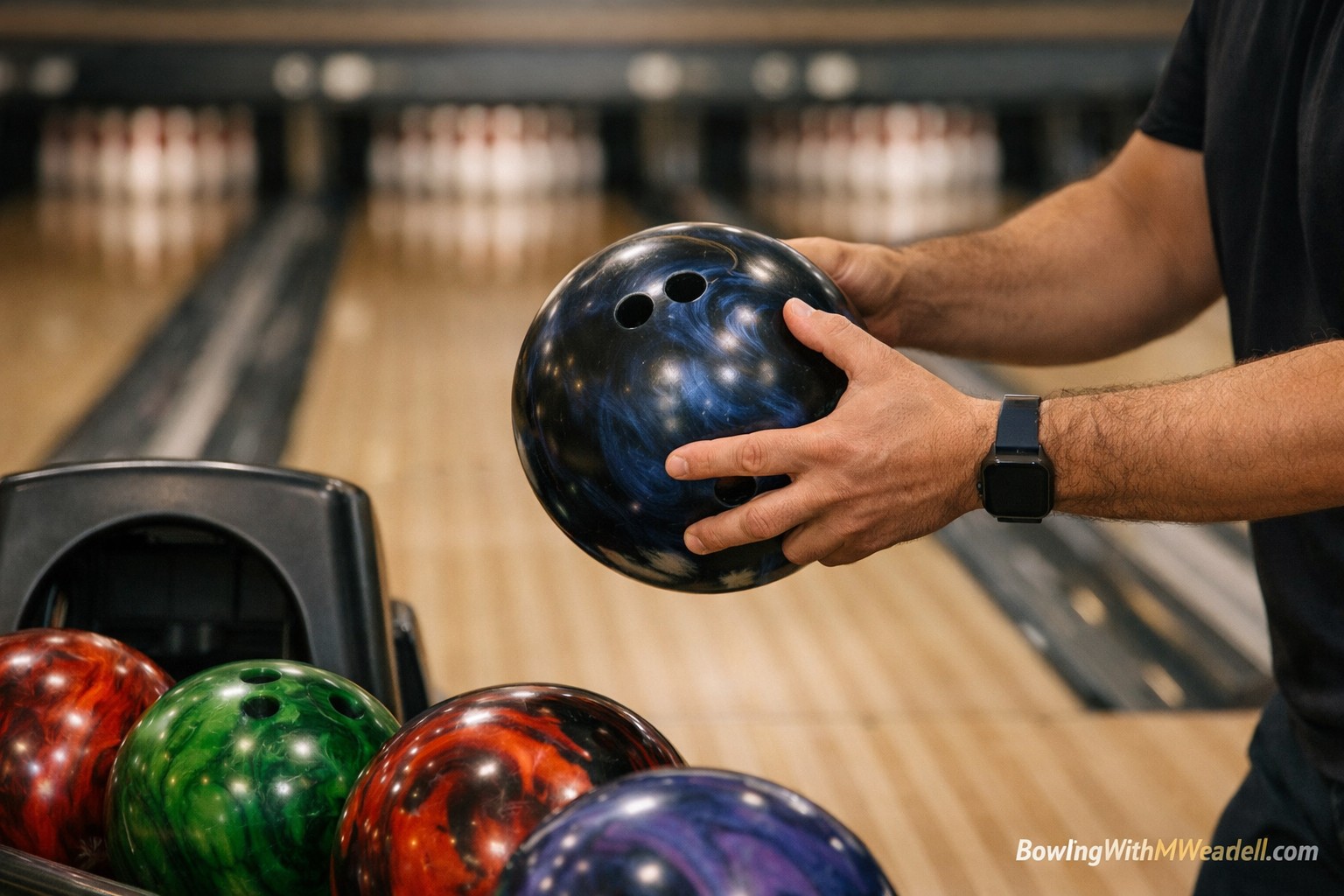
Bowling balls come in generic drilling layouts, but your hand is unique. A proper pro shop fitting will drill finger and thumb holes sized to your exact span and pitch — and this makes an enormous difference in how the ball feels and releases off your hand. A ball that fits properly should feel like an extension of your arm, not something you’re gripping for dear life.
If you’re buying online, factor in drilling costs at your local pro shop. Budget $40–$70 for a professional drill job on top of the ball price.
What I Recommend for Most Recreational and League Bowlers
For bowlers with an average between 100 and 160, the sweet spot is a mid-price reactive resin ball in the $80–$130 range — properly drilled. Brands like Storm, Hammer, Brunswick, and Motiv all make excellent entry-to-mid performance balls at that price point. I’ll be posting full reviews of my current top picks shortly — subscribe to stay updated.
The Bottom Line
Don’t get paralyzed by specs. Focus on cover stock, weight, and fit — in that order. Get a proper drill job from your local pro shop, pair it with a plastic spare ball, and you have everything you need to compete in any recreational or league setting.
Questions about a specific ball you’re considering? Send me a message — I’m happy to give you a straight answer.
Affiliate disclosure: Links to specific products in my reviews may be affiliate links. I only recommend balls I’ve personally tested. Read my full disclosure here.
Leave a Reply